
US President Donald Trump on Sunday announced that the American Navy will block all maritime traffic entering the Strait of Hormuz, marking a significant escalation in tensions with Iran following the collapse of peace talks.
In a statement, Trump said US forces would interdict any vessel in international waters found to have paid transit tolls to Tehran, signalling a tougher enforcement posture in one of the world’s most critical energy routes.
Trump Accuses Iran of Failing Commitments
Outlining the decision, Trump accused Iran of reneging on earlier assurances regarding free passage through the Strait of Hormuz. He said the failure to uphold commitments had caused disruption and uncertainty for global trade and energy markets.
The US President also dismissed Iran’s claims about its naval capabilities, asserting that its maritime strength had been significantly weakened.
Talks in Islamabad End Without Breakthrough
The announcement follows the breakdown of high-level negotiations between the United States and Iran held in Islamabad. Despite extended discussions aimed at securing a long-term resolution, both sides failed to reach an agreement, leaving the existing ceasefire in a fragile state.
US Vice President J. D. Vance acknowledged that while some progress was made, the talks ultimately ended in a stalemate, which he described as more detrimental to Iran than to the United States.
US Navy Presence Signals Strategic Advantage
Earlier indications of a potential blockade emerged after Trump shared an analysis suggesting that the US Navy could effectively control maritime movement in the region. The report highlighted the deployment of major assets, including aircraft carriers such as the USS Gerald Ford and USS Abraham Lincoln, in the Persian Gulf.
These deployments are seen as strengthening Washington’s ability to enforce a blockade and assert control over the crucial shipping lane.
Iran Responds, Blames ‘Excessive Demands’
Reacting to the stalled negotiations, Iran’s Foreign Ministry spokesperson Esmaeil Baqaei stated that Tehran remains committed to safeguarding its national interests through all available means, including diplomacy.
He said the discussions covered key issues such as Iran’s nuclear programme, sanctions relief, and war-related matters, but were hindered by what he described as excessive demands from the opposing side.
Global Concerns Rise Over Key Energy Route
The Strait of Hormuz remains one of the world’s most vital oil transit chokepoints, and any disruption to shipping in the region could have far-reaching global consequences.
With tensions escalating and diplomatic efforts stalled, the situation has raised concerns about stability in the region and the potential impact on international energy supplies and trade routes.
(With inputs from Agencies)
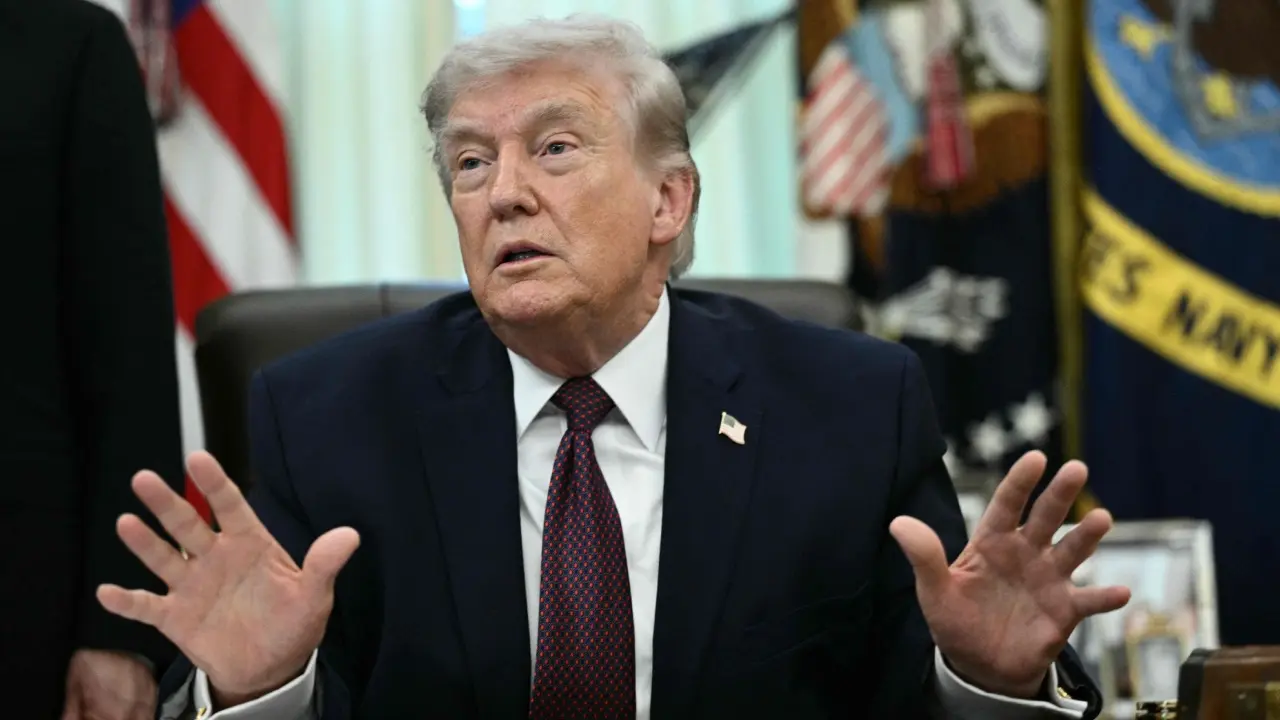
Donald Trump orders US Navy blockade of Strait of Hormuz after Iran talks fail
