
Iran’s Revolutionary Guards said on Sunday that the country would not reopen the Strait of Hormuz, a vital waterway for the global economy, until the United States (US) meets Tehran’s conditions, including compensation for war damages, news agency AFP reported.
Iran has imposed an effective blockade on the strait since the US and Israel attacked in late February. Tehran also wants to charge tolls for passage and has targeted ships it accuses of attempting to circumvent its preferred route.
Continued attacks in the waterway, which was open to transit before the war, led to the collapse of an April ceasefire.
Mediators have urged both sides to return to the terms of a subsequent June memorandum that outlined a path towards peace talks.
Iranian Foreign Minister Abbas Araghchi said discussions with Oman on transit and management of the strait were “approaching the final stages”. However, he added that reopening Hormuz “is subject to other conditions and compensation for the violation” of the June agreement.
Araghchi also denied on Sunday that Iran was negotiating directly with the United States, saying the two sides were merely “exchanging messages” through intermediaries.
Iran sets conditions for reopening Strait of Hormuz
Iran’s security chief Mohammad Bagher Zolghadr on Saturday listed several conditions for reopening the strait, including an end to the “war and aggression against Iran and its allies in Lebanon, Palestine, Yemen and Iraq”.
He also demanded the lifting of a US counterblockade of Iranian ports, an end to sanctions, the release of frozen Iranian assets and compensation for wartime damage, according to remarks reported by Tasnim news agency.
The Revolutionary Guards said on Sunday that their strategy was to keep the strait closed “until the enemy accepts all our conditions… the strait is now actually a theatre of war for us and not just a waterway”.
The comments came as transit through the Strait of Hormuz has dropped significantly, with Iran targeting ships it accuses of bypassing its preferred route through Iranian waters.
The United Arab Emirates’ foreign ministry on Saturday condemned what it described as a “hostile Iranian attack” on a tanker belonging to ADNOC (Abu Dhabi National Oil Company) while it was transiting the Strait of Hormuz. The ministry said the tanker was targeted with a missile but there were no casualties.
Later on Saturday, the United Kingdom Maritime Trade Operations (UKMTO) said a ship was hit by a projectile off Oman in the Strait of Hormuz, causing a fire that was subsequently extinguished. No casualties were reported. It was unclear whether the incident involved the same vessel.
Oman condemns attacks on vessels transiting Strait of Hormuz
Oman’s foreign ministry on Saturday condemned “repeated attacks on vessels transiting the Strait of Hormuz” without naming Iran.
It said ongoing negotiations over navigation arrangements in the strait were proceeding in a “positive and constructive atmosphere” and urged all sides to avoid actions that could jeopardise the progress.
The previous Iran-US deal, which was intended to provide a starting point for negotiations on a permanent settlement, stated that Tehran and Muscat would discuss future arrangements for the strait with other Gulf countries and “in line with the applicable international law”.
International law generally prohibits the imposition of tolls on such waterways.
Meanwhile, Yemen’s Iran-backed Houthi rebels announced on Sunday that they had struck a Saudi oil facility on the country’s Red Sea coast.
The announcement came after Saudi Arabia said it had extinguished a fire at the site. The Iran-aligned movement is seeking to disrupt a second vital waterway.
Turkey expects Egypt to join defence alliance with Saudi Arabia, Pakistan
Turkey’s Foreign Minister Hakan Fidan said on Saturday that he expected Egypt to join a joint defence agreement between Turkey, Saudi Arabia and Pakistan aimed at stabilising the region.
“I believe that at the next stage Egypt will also be among us in the alliance. We already act toward one another as if we were alliance members,” Fidan said in an interview.
A drone struck US assets at an Egyptian port on the Mediterranean last month, marking the first drone attack on Egyptian territory since the outbreak of the Iran war.
Fidan said the agreement was not directed against any specific country.
“There is no common threat that we have put in writing,” he said, according to the news agency.
Pakistan’s foreign ministry said on Friday that the pact meant an attack on any member would be regarded as an attack on all, describing it as an agreement “intended to strengthen collective deterrence”.
(With AFP inputs)
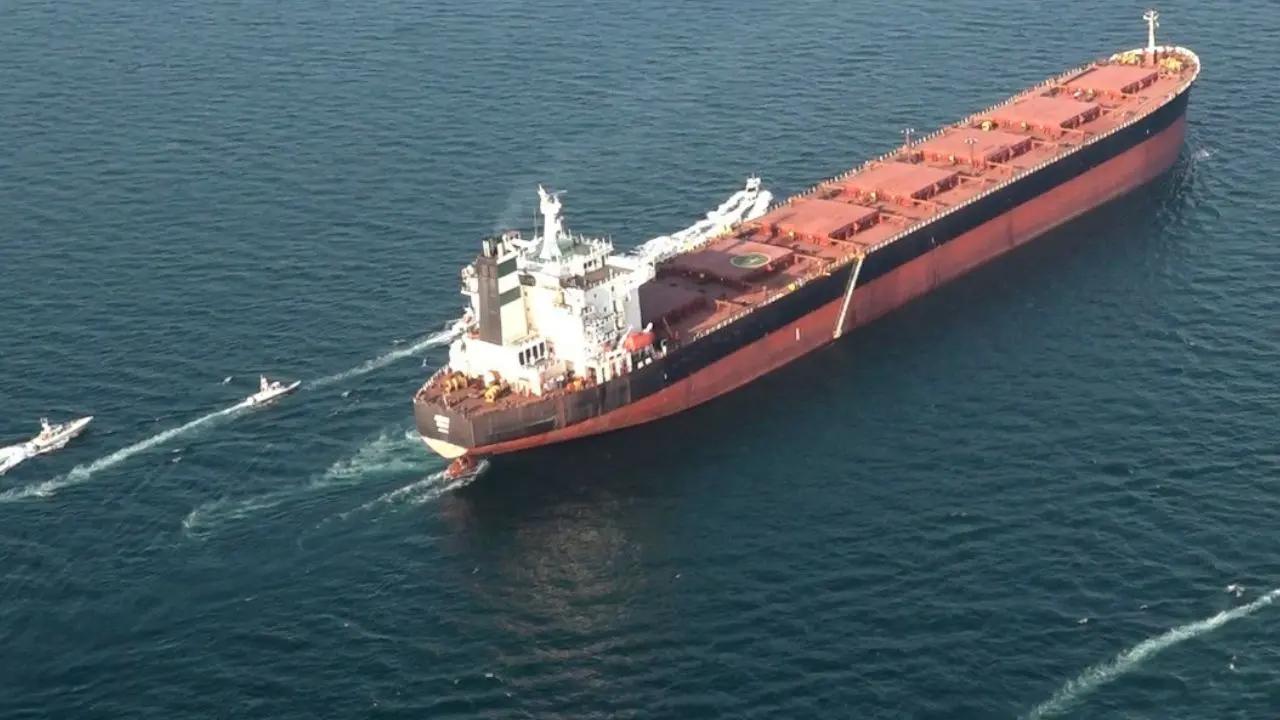
Hormuz crisis deepens: Iran sets tough conditions for reopening vital waterway
