
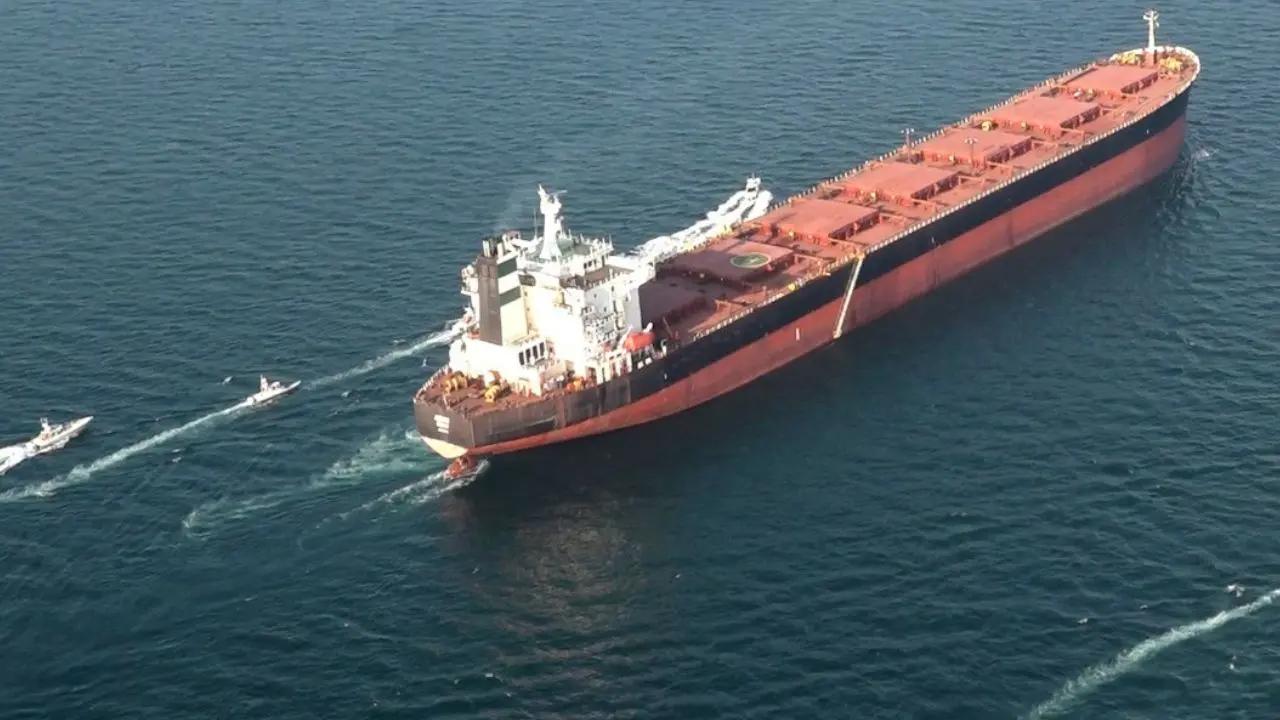
The US military has reported turning back 10 vessels attempting to sail out of Iranian ports during the initial 48 hours of its naval blockade against Iran.
“Ten vessels have now been turned around and ZERO ships have broken through since the start of the US blockade on Monday,” US Central Command (CENTCOM) stated in a post on X. CENTCOM earlier reported nine vessels turned back and later added a tenth, which it said was “redirected” back to Iran by a US guided missile destroyer.
Yesterday, an Iranian-flagged cargo vessel tried to evade the U.S. blockade after leaving Bandar Abbas, exiting the Strait of Hormuz, and transiting along the Iranian coastline. The guided-missile destroyer USS Spruance (DDG 111) successfully redirected the vessel, which is… pic.twitter.com/EUnwhwYiDv
— U.S. Central Command (@CENTCOM) April 15, 2026
The blockade came into effect at 2 pm (Greenwich Mean Time) on Monday after peace talks failed. While CENTCOM maintained that no vessels broke through, maritime tracking data from provider Kpler indicated that at least seven Iran-linked vessels passed through the Strait of Hormuz after the blockade began, with tracking from Tuesday showing at least three ships crossing (some later turned back).
Tehran`s forces had earlier effectively closed the strait following the start of the US-Israeli air campaign against Iran on February 28.
Netanyahu: US and Israel share `identical goals` on Iran
Israeli Prime Minister Benjamin Netanyahu said on Wednesday that Israel and the United States remain fully aligned in efforts to contain Iran.
“Our American friends keep us constantly updated on their contacts with Iran. The objectives of the United States and our own are identical,” Netanyahu stated in a televised speech.
He outlined the shared goals: “We want to see enriched material removed from Iran; we want to see the elimination of enrichment capability within Iran; and, of course, we want to see the (Hormuz) strait reopened.”
Netanyahu also addressed negotiations with Lebanon, saying the top priority was the “dismantling” of Hezbollah: “In the negotiations with Lebanon, there are two central objectives: first, the dismantling of Hezbollah; second, a sustainable peace… achieved through strength.”
Pak PM pushes for US-Iran peace talks during Saudi meet
Pakistan Prime Minister Shehbaz Sharif reiterated Islamabad`s commitment to promoting dialogue between the United States and Iran during a meeting with Saudi Arabia`s Crown Prince Mohammed bin Salman.
In a post on X, Sharif highlighted Pakistan`s role in facilitating a US-Iran ceasefire and initiating “historic peace talks” in Islamabad. He expressed solidarity with Saudi Arabia and appreciated its “patience and restraint” under the Crown Prince`s leadership.
“I reiterated Pakistan`s firm commitment to advancing its efforts to encourage both the U.S. and Iran towards an agreement aimed at lasting peace and stability in the region,” Sharif stated.
Iran`s Supreme Leader representative in India calls conflict an `individual war`
Dr Abdul Majid Hakeem Ilahi, representative of Iran`s Supreme Leader in India, described the ongoing West Asia conflict as an “individual war” pursued by Israeli leadership for decades.
“The Prime Minister of Israel… wanted to initiate this war for 40 years against Iran. He could not convince any President of the United States in the past (to launch a war against Iran), but this time he convinced US President Trump to support him… This is an individual war,” Ilahi said while speaking to the media in Jaipur.
He criticised the US-Israel alliance, claiming diplomatic efforts were not taken seriously and that military pressure failed to achieve objectives. Ilahi added that Iran announced from the beginning that the other side was “not serious about the negotiation.”
Emphasising civilisational ties, he noted: “Our relationship with India is rooted in 5,000 years of cultural, educational, and philosophical connections… The relationship between Iran and India is very strong, and after the war, it will be even stronger and deeper.”
Qatari Emir urges de-escalation in call with Trump
Qatari Emir Sheikh Tamim bin Hamad Al Thani held a phone conversation with US President Donald Trump and called for urgent de-escalation amid rising tensions in West Asia.
The Emir stressed the importance of intensifying international efforts to prevent further escalation and pursue diplomatic solutions to safeguard regional and global security. The leaders also discussed the impact of tensions on global energy markets and international supply chains.
Meanwhile, the United Arab Emirates summoned the Iraqi charge d`affaires in Abu Dhabi and handed over a “protest note” over alleged “terrorist attacks” originating from Iraqi territory. The US and Saudi Arabia had taken similar steps recently.
These developments reflect ongoing military posturing alongside diplomatic efforts, with Pakistan continuing to mediate and regional players calling for restraint following failed or stalled peace talks.
(With AFP and ANI inputs)

8 comments